

“Affordable Housing” Has Been Hijacked — And Why Property Investors Need to Pay Attention
Few terms in housing policy sound as reassuring as “affordable housing.” It suggests balance. Fairness. A functioning system. But for residential property investors, the term has become something else entirely: a misleading label that obscures real supply failures and distorts market signals. In Australia, “affordable housing” has been quietly redefined. And that redefinition is shaping…
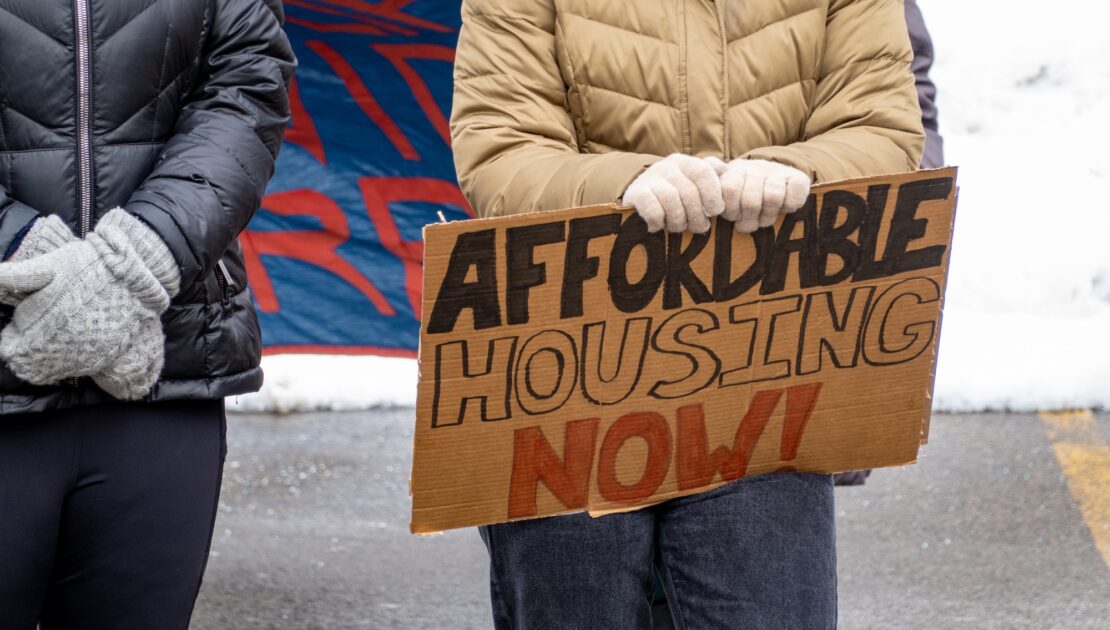
Few terms in housing policy sound as reassuring as “affordable housing.” It suggests balance. Fairness. A functioning system.
But for residential property investors, the term has become something else entirely: a misleading label that obscures real supply failures and distorts market signals.
In Australia, “affordable housing” has been quietly redefined. And that redefinition is shaping where demand builds, where risk accumulates, and where investment returns are likely to concentrate over the next decade.
Mal has unpacked how this shift occurred and why understanding it is now critical for investors making decisions into 2026 and beyond. Stay tuned to our socials for his latest video.
What “Affordable Housing” Was Supposed to Mean (and Why Investors Care)
Originally, affordable housing had a clear, income-based definition:
- Housing costs should not exceed ~30% of household income
- Homes should be located near jobs, transport and essential services
- Affordability was measured against what people earn, not what markets charge
For investors, this definition mattered because it acted as a demand indicator. When affordability thresholds were breached, it signalled rising rental stress, unmet demand, and the need for new supply.
That clarity has now been lost.
When “Affordable” Became “Social” and the Private Market Picked Up the Slack
One of the most consequential shifts has been the quiet merging of affordable housing with social housing, without governments ever acknowledging the difference.
They are not the same.
- Social housing is means-tested, targeted, and serves a small cohort
- Affordable housing, by definition, should serve a much broader group, including essential workers, single-income households, moderate earners, and young families
For investors, this distinction is critical.
When governments redefine “affordable” as a narrow, subsidised product, they effectively step away from the broader rental market leaving millions of households to compete for private rental stock instead.
The outcome:
- Structural demand pressure in mainstream rental housing
- No corresponding increase in supply
- A growing gap between political rhetoric and market reality
This isn’t policy failure in theory, it’s demand displacement in practice.
The “Below Market Rent” Illusion: A Warning Sign for Investors
As affordability has deteriorated, governments have increasingly reframed it as “below market rent.”
For investors, this is not a solution signal, it’s a red flag.
A recent example saw a $1,100-per-week apartment in Bondi labelled “affordable.”
Discounted? Perhaps. Affordable by income standards? Absolutely not.
This matters because:
- “Below market” does not anchor affordability to wages
- It allows almost any dwelling to be branded affordable, regardless of accessibility
- It masks the extent of affordability failure rather than fixing it
For investors, markets where affordability is managed through discounts rather than supply expansion tend to exhibit:
- Persistent rental stress
- Heightened political and regulatory risk
- Longer-term volatility
When language replaces delivery, pressure builds elsewhere. Usually in the private market.
The Data Behind the Disconnect (and What It Signals)
The gap between affordability rhetoric and housing delivery has widened sharply:
- Public housing stock has fallen from ~315,000 dwellings (2015) to ~286,000 (2024)
- Social housing waitlists exceed 66,000 households in Victoria alone and continue to rise nationally
- The $10bn Housing Australia Future Fund delivered ~370 homes by mid-2025, yet none were newly built
- The federal housing accord is already ~20,000 homes behind schedule
- Around 70% of renters now spend more than 30% of income on housing
For investors, this data points to one conclusion: demand pressure is not temporary, it is structural. And structural pressure, when met with constrained supply, is where long-term investment fundamentals are formed.
Why This Matters for Property Investors Heading into 2026
As affordability continues to erode, regardless of how it is branded, the investment implications are becoming increasingly clear:
- Demand is concentrating in genuinely lower-entry-price housing, not government-labelled “affordable” stock
- Smaller dwellings and modest homes outperform because they sit within real income constraints
- Rental yields strengthen where supply cannot be easily substituted or rapidly expanded
- Capital growth increasingly favours locations where affordability pressure meets planning friction
In short, true affordability, not political affordability, is now a core investment filter.
Investors who rely on government language risk misreading demand. Those who understand where income thresholds are being breached, and where supply is failing to respond, are better positioned to capture both yield resilience and long-term growth.
Seeing Through the Language: The Clarity Report
This disconnect between policy language and market reality is exactly what we unpack in The Clarity Report, which we are preparing to launch shortly.
The report is not a political critique. It is an investor framework.
It identifies:
- where affordability pressure is structurally embedded
- which housing segments are absorbing displaced demand
- and how supply constraints are likely to shape returns over the next cycle
Final checks are underway and design elements are being loaded. Early readers have already asked the same question:
“Is this Australia’s most honest housing report?”
We’ll let you decide. You can sign up to be among the first to get access here.